"I call to the stand-- Old Blacke"
The once virile calf was now an old bull, and although he once was known for having hair as black as collyrium, it was now peppered with gray patches. The bull's bones creaked all the way to the front of the room. He finally stopped and gave a loud "muff" sound that signaled he was prepared to speak.
The prosecutor began again, "Good morning Old Blacke. I have prepared a list of questions for you regarding the payment of a certain caravan owner on a scorching day years ago. As I understand, you were once shortchanged by this man, and demanded proper pay even though you were an animal working for a man. How do you rationalize asking for such pay? The work must not have been too tumultuous for a bull of your caliber?"
The bull bellowed out a low droning, "Fool, do you not know who I was taking care of at the time?" The bull cleared his throat once more, "At the time of this incidence, I was caring for a lady who once was the only one who would care for me. The late Miriam was one of the bestest women I have ever met in my brief life. She took me in as a personal burden to her, and I felt the only way I could ever repay her would be to make a bull's wage pulling carts."
The prosecutor interjected, "Aha! But why would you attempt to make a wage for her instead of working for her yourself?! Clearly there was another motive."
The bull scoffed, "The loving Miriam made sure I would never have to work for her, and she never wanted to sell me because of the happiness I brought to the children of the town. In fact, I see some of those children today in the jury."
The bull wiped his face, an amazing feat for any quadruped and continued, "I only agreed to work for a wage whenever that scoundrel caravan owner attempted to steal me for his own. I even made a proper negotiation agreement with him that he eventually broke. I can understand one's apprehension in paying an animal for its work, but I believe that once you enter negotiations with an animal, you cede over those beliefs and you therefore must maintain your agreement. Additionally, the carts he needed to move numbered in the hundreds, yet he barely had enough oxen to move ten. This caravan owner was not only sinister in his motives to not pay me a previously agreed sum, he was also negligent in possibly endangering the health of his own herd. It was only once I came along that we were able to move all of the carts, and it was afterward that he attempted to short-change me. Let me ask you: Who is the one who should be on trial here?"
...
The bailiff called out, "The judge will now read the jury's verdict in this case."
The judge unwrapped the parcel and began to speak with a slight smirk on his face, "The jury has ruled that the defendant in this case, Mr. Blacke, is completely innocent. And just let me tell you, Mr. Prosecutor, I don't think I've ever met a human that seemed as noble as this great bull. This court is dismissed."
Author's note:
This story was in reference to the story from Jataka's Fairy Tales located here. I thought the weakest part of my story was why the case was happening so much later than the original incident. I would like the reader to assume this was likely because of the inherent flaws in expediency of the court in this world.
Showing posts with label Storytelling. Show all posts
Showing posts with label Storytelling. Show all posts
Thursday, November 20, 2014

Tuesday, November 18, 2014
Step Up: Ravana's Time - Storytelling Wk. 7
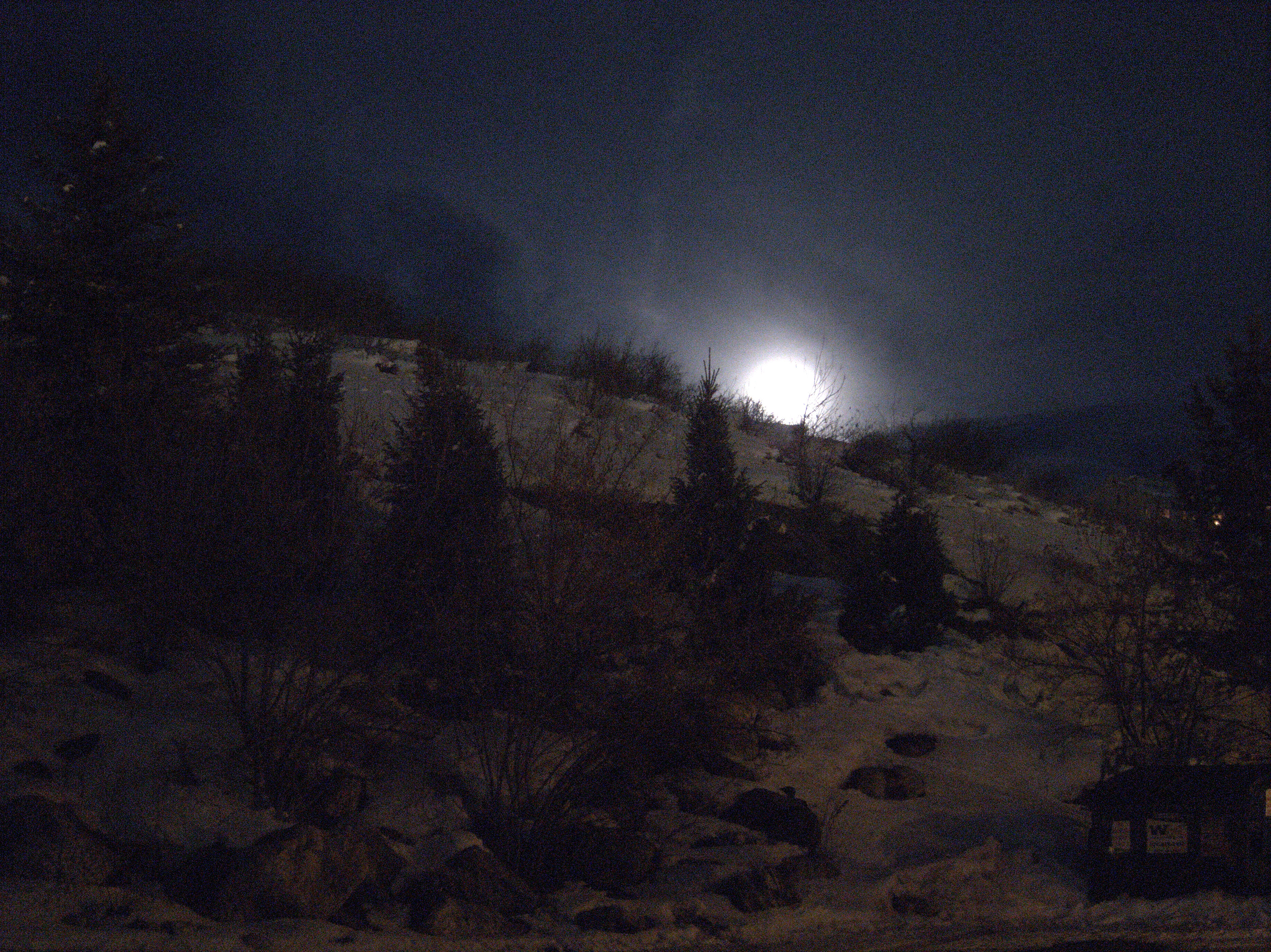
Ravana stepped out onto the dance floor. He had millions of chains and bangles attached to each hand, elbow, and shoulder. Watching him sway to the beat of a distant drum was like peering out onto a vibrantly violent sea. The moon had perched itself on a nearby mountain for a better view of the strutting and spinning that was certain to occur.
Out of the edge of the clearing, Rama appeared. He wore what resembled a bright orange tracksuit, except this suit could never aid a runner; it included giant, billowing parachute pants. Rama's posse assisted him in putting on his dancing boots, which were sequined all the way to the top. The glimmer of these boots was so intense that it blinded Ravana as he swung, spun, and stepped rhythmically across the floor. He nearly crashed into a tree nearby before recovering into a full-on frolic of limbs in excitement.
He called out to Rama, "You silly people nearly ruined my groove!" Rama scoffed at this remark and replied, "Is that what you call a groove?" Ravana immediately stopped his dance, but that's not to say his jewelry and sweeping clothing did not continue his last few lines for him. Ravana then turned away and crossed his arms. Years passed before he shattered the silence, "I challenge you... TO A DANCE OFF!"
Rama looked down at his own feet purposefully and back up again,"Let's do it."
It was very obvious early on that Rama was outmatched by the incredible dancer that was Ravana. For every spin, flip, and bow that Ravana had to offer Rama, Rama managed to either trip himself or knock down a bystander at the floor's edge. The dance would have ended after only a few seconds if Rama hadn't lost his sparkling boots while attempting to click his heels together between his drunken stumbles. The boots were quite beautiful, but their maker had clearly mistaken Rama's feet for those of the great Vali because they merely dangled at the ends of his legs whenever he picked up his feet.
The music finally began to carry off, leaving Ravana to revel in the beauty of his victory. What Rama was doing could no longer be classified as dancing. He had fallen down so many times that every joint in his body began to ache, and so he had begun to resort to only bobbing his head up and down while appreciating Ravana's final jaunt across the floor. Rama then collapsed and was only able to escape the clearing once some of his crew carried him away in their arms. Just as Ravana thought he would never have to deal with the atrocious dancer ever again, he heard Rama yelp out in the distance, "I'm going to take you down with my own bow and arrow tomorrow!"
Ravana was taken aback by this comment. "Do people actually resort to violence to resolve their issues?" he asked himself. That thought lasted about as long as it took for the beat of the drum to make its way once again over the mountain, and Ravana's dazzling dance carried him off into the night.
Author's Note:
While Rama did not ever participate in a dance with Ravana, I thought it might be entertaining to let Ravana win something over him. I felt a bit of sympathy for him. While he was a very powerful king of the Rakshasas, he deserved to be really good at something he clearly enjoyed. I'm not sure if Buck ever alludes to Rama's dancing skill, but I'm going to have to give it up to Ravana on this one.
I quickly discovered while writing this that I had no clue how to describe dancing. I originally meant for this to be funny, and it was to some extent, but I ended up liking the Ravana vs. Rama reversal even more. The part at the end is supposed to be describing the lack of preparation of Ravana for the upcoming final battle.
Source:
Buck, William (1976). Ramayana: King Rama's Way.
 |
| From Flickr |
He called out to Rama, "You silly people nearly ruined my groove!" Rama scoffed at this remark and replied, "Is that what you call a groove?" Ravana immediately stopped his dance, but that's not to say his jewelry and sweeping clothing did not continue his last few lines for him. Ravana then turned away and crossed his arms. Years passed before he shattered the silence, "I challenge you... TO A DANCE OFF!"
Rama looked down at his own feet purposefully and back up again,"Let's do it."
It was very obvious early on that Rama was outmatched by the incredible dancer that was Ravana. For every spin, flip, and bow that Ravana had to offer Rama, Rama managed to either trip himself or knock down a bystander at the floor's edge. The dance would have ended after only a few seconds if Rama hadn't lost his sparkling boots while attempting to click his heels together between his drunken stumbles. The boots were quite beautiful, but their maker had clearly mistaken Rama's feet for those of the great Vali because they merely dangled at the ends of his legs whenever he picked up his feet.
The music finally began to carry off, leaving Ravana to revel in the beauty of his victory. What Rama was doing could no longer be classified as dancing. He had fallen down so many times that every joint in his body began to ache, and so he had begun to resort to only bobbing his head up and down while appreciating Ravana's final jaunt across the floor. Rama then collapsed and was only able to escape the clearing once some of his crew carried him away in their arms. Just as Ravana thought he would never have to deal with the atrocious dancer ever again, he heard Rama yelp out in the distance, "I'm going to take you down with my own bow and arrow tomorrow!"
Ravana was taken aback by this comment. "Do people actually resort to violence to resolve their issues?" he asked himself. That thought lasted about as long as it took for the beat of the drum to make its way once again over the mountain, and Ravana's dazzling dance carried him off into the night.
Author's Note:
While Rama did not ever participate in a dance with Ravana, I thought it might be entertaining to let Ravana win something over him. I felt a bit of sympathy for him. While he was a very powerful king of the Rakshasas, he deserved to be really good at something he clearly enjoyed. I'm not sure if Buck ever alludes to Rama's dancing skill, but I'm going to have to give it up to Ravana on this one.
I quickly discovered while writing this that I had no clue how to describe dancing. I originally meant for this to be funny, and it was to some extent, but I ended up liking the Ravana vs. Rama reversal even more. The part at the end is supposed to be describing the lack of preparation of Ravana for the upcoming final battle.
Source:
Buck, William (1976). Ramayana: King Rama's Way.
Saturday, November 1, 2014
Storytelling Wk 9: Epic Twitter
@NotYourAverageRiver
Lil Miss Ganges!


1,756,998 followers
3 following
@YoKingShantanu
Hey @NotYourAverageRiver, I saw you earlier down by the Ganges. You were lookin' fine. I will give you loads of money if you go ahead and marry me. Deal?!
@YoKingShantanu
Yo @NotYourAverageRiver , I promise to not check your texts or tweet history if we get married. I won't call you when you're out clubbin'
@YoKingShantanu
I still haven't heard back on my offer. I'll send you a gold elephant. @NotYourAverageRiver
@NotYourAverageRiver
I accept your offer. See you around. Love you lots ;)
@NotYourAverageRiver
I had a child born today. It's swimming with the fishes.
@LilRiverBaby1
@NotYourAverageRiver that was soooooo cold of you to toss me in that river. I'm going to unfollow you. Did you see what she did to me, @YoKingShantanu? I need you to come fish me out.
@LilRiverBaby1
You took a selfie after tossing me into the river?! @NotYourAverageRiver
@LilRiverBaby1
I'm glad to have company and all, but did you really have to cast all seven of us into a river? Hit up the broskis with a follow though! @LilRiverBaby2 @LilRiverBaby3 @LilRiverBaby4 @LilRiverBaby5 @LilRiverBaby6 @RiverBabythaCreator
@YoKingShantanu
I got a call from some of my "high up" buddies. They're saying you sent @RiverBabythaCreator to them, too? C'mon. @NotYourAverage River, that's horrible
@RiverBabyThaCreator
I mean, I'm just a little baby and all, but @NotYourAverageRiver must have a reason for all of this. Maybe you can talk to her, dad. @YoKingShantanu
@YoKingShantanu
I know I said I wouldn't question you or nothin' but we need to talk. Message me back @NotYourAverageRiver
@NotYourAverageRiver
I cast those babies into the river for all of their past sins. Don't worry though, this one's a keeper! @Bhishma4real
@NotYourAverageRiver
Those babies were eight Vasus cursed by Vasishtha, himself. If anything, I did them a favor by freeing them from this mortal realm! #NotSorry
@NotYourAverageRiver
@YoKingShantanu it's been real and all but I've got to go #brokenpromises #loveyanot
@YoKingShantanu
That's cool @NotYourAverageRiver, at least I have my son to raise. Can't wait until he can throw a football! #NFLready @Bhishma4real
@Bhishma4real
Sorry, dad, but I think I'm going with mom. #priorities @NotYourAverageRiver
@YoKingShantanu
K @Bhisma4real
@Bhishma4real
It's not your fault @YoKingShantanu, I just have some things to work out with old man Vashistha. He and mom go way back. It could be worse. You're still the king!
@YoKingShantanu
Can't get Michael Bolton's, "How Am I Supposed to Live Without You?" out of my head. #np
@YoKingShantanu has made his tweets private.
Author's Note:
This was a Twitter synopsis (although I did not always adhere to the 140 character limit) of the opening story in the Mahabharata. In the story, King Shantanu (I've also read Santanu) sees a beautiful woman on the banks of the Ganges. This happens to be Ganga. She agrees to marry him only if he agrees to one condition: he is to never question her actions. Ganga proceeds to have seven children and subsequently drowns each one in the river. Upon the birth of the eighth child, Shantanu cannot hold back any more and confronts Ganga. Ganga finally explains that these "Vasus" had been cursed by Brahma, and by killing the children she is lifting the curse from them upon one year of birth. Since their agreement had been broken, Ganga then leaves with the baby. The baby goes on to be raised by Vashistha.
I tried my best to format this exchange at the very beginning of the Mahabharata to make it look like Twitter. I hope everyone can decipher who is talking to whom, but the gist is the bold is for the person posting each tweet. I tried to make the deaths of the babies being cast into the rivers more lighthearted and mystical. I know I didn't get to put much content in the story, but the twitter formatting actually uses up a ton of words and characters.
Hey @NotYourAverageRiver, I saw you earlier down by the Ganges. You were lookin' fine. I will give you loads of money if you go ahead and marry me. Deal?!
@YoKingShantanu
Yo @NotYourAverageRiver , I promise to not check your texts or tweet history if we get married. I won't call you when you're out clubbin'
@YoKingShantanu
I still haven't heard back on my offer. I'll send you a gold elephant. @NotYourAverageRiver
@NotYourAverageRiver
I accept your offer. See you around. Love you lots ;)
@NotYourAverageRiver
I had a child born today. It's swimming with the fishes.
@LilRiverBaby1
@NotYourAverageRiver that was soooooo cold of you to toss me in that river. I'm going to unfollow you. Did you see what she did to me, @YoKingShantanu? I need you to come fish me out.
@LilRiverBaby1
You took a selfie after tossing me into the river?! @NotYourAverageRiver
@LilRiverBaby1
I'm glad to have company and all, but did you really have to cast all seven of us into a river? Hit up the broskis with a follow though! @LilRiverBaby2 @LilRiverBaby3 @LilRiverBaby4 @LilRiverBaby5 @LilRiverBaby6 @RiverBabythaCreator
@YoKingShantanu
I got a call from some of my "high up" buddies. They're saying you sent @RiverBabythaCreator to them, too? C'mon. @NotYourAverage River, that's horrible
@RiverBabyThaCreator
I mean, I'm just a little baby and all, but @NotYourAverageRiver must have a reason for all of this. Maybe you can talk to her, dad. @YoKingShantanu
@YoKingShantanu
I know I said I wouldn't question you or nothin' but we need to talk. Message me back @NotYourAverageRiver
@NotYourAverageRiver
I cast those babies into the river for all of their past sins. Don't worry though, this one's a keeper! @Bhishma4real
@NotYourAverageRiver
Those babies were eight Vasus cursed by Vasishtha, himself. If anything, I did them a favor by freeing them from this mortal realm! #NotSorry
@NotYourAverageRiver
@YoKingShantanu it's been real and all but I've got to go #brokenpromises #loveyanot
@YoKingShantanu
That's cool @NotYourAverageRiver, at least I have my son to raise. Can't wait until he can throw a football! #NFLready @Bhishma4real
@Bhishma4real
Sorry, dad, but I think I'm going with mom. #priorities @NotYourAverageRiver
@YoKingShantanu
K @Bhisma4real
@Bhishma4real
It's not your fault @YoKingShantanu, I just have some things to work out with old man Vashistha. He and mom go way back. It could be worse. You're still the king!
@YoKingShantanu
Can't get Michael Bolton's, "How Am I Supposed to Live Without You?" out of my head. #np
@YoKingShantanu has made his tweets private.
Author's Note:
This was a Twitter synopsis (although I did not always adhere to the 140 character limit) of the opening story in the Mahabharata. In the story, King Shantanu (I've also read Santanu) sees a beautiful woman on the banks of the Ganges. This happens to be Ganga. She agrees to marry him only if he agrees to one condition: he is to never question her actions. Ganga proceeds to have seven children and subsequently drowns each one in the river. Upon the birth of the eighth child, Shantanu cannot hold back any more and confronts Ganga. Ganga finally explains that these "Vasus" had been cursed by Brahma, and by killing the children she is lifting the curse from them upon one year of birth. Since their agreement had been broken, Ganga then leaves with the baby. The baby goes on to be raised by Vashistha.
I tried my best to format this exchange at the very beginning of the Mahabharata to make it look like Twitter. I hope everyone can decipher who is talking to whom, but the gist is the bold is for the person posting each tweet. I tried to make the deaths of the babies being cast into the rivers more lighthearted and mystical. I know I didn't get to put much content in the story, but the twitter formatting actually uses up a ton of words and characters.
- Narayan, R. K. (1978). The Mahabharata.
Thursday, October 30, 2014
Storytelling Post Week 11: First Encounter
Siddhartha erupted from his bed, drenched in sweat from head to toe. He couldn't help but have these horrific dreams -- beggars were crawling around the streets, vandals were breaking windows and screaming expletives at the shop owners, and women were even being molested and raped when out past the late hour. He knew not how these travesties could occur, and he also knew not how he was seeing them. He had never ventured far from the palace. In fact, he believed his father would never let that happen. One day, Siddhartha came up to his father to ask to explore the adjacent streets around the palace. Siddhartha could see the tumult that such a request was causing his father. Siddhartha immdeiately regretted his request and began to inch away from his father, realizing that Siddhartha's request would be too heavy on the heart of the old man. Siddhartha had already turned away when his father put a firm hand onto his shoulder.
His father responded, "My beautiful and strong elephant, you have been held under captivity for far too long. I will permit this request. Let me coordinate.with some of my associates so I will know that you will be under supervision of safely watching eyes."
Siddhartha's father sent his most trustworthy guards and associates around to clean up the streets around the palace. The father knew what Siddhartha needed this trip to clear his mind and conscience, bit this did not mean that Siddhartha needed to see evvery unsightly detail. The king even went so far as to pay the taverns nearby to close their doors for the day. The king thought this would keep the regular patrons from contaminating the beautiful mind of his Siddhartha.
After his final finishing touches on cleaning and decorating the city, the king returned home to Siddhartha to give him permission to travel out on the next morning. Siddhartha, who originally would have been ecstatic to finally escape the confines of the palace, s
eemed aloof upon hearing his father's words. Siddhartha thought to himself, "I made this request of my father so that I may see the good and bad of the world for what it is.But now, I fear that I may not be able to handle the sadness and treachery that exists in the real world." He decided to sleep on it, which only lead to the same sequence of dreams he had the night before.
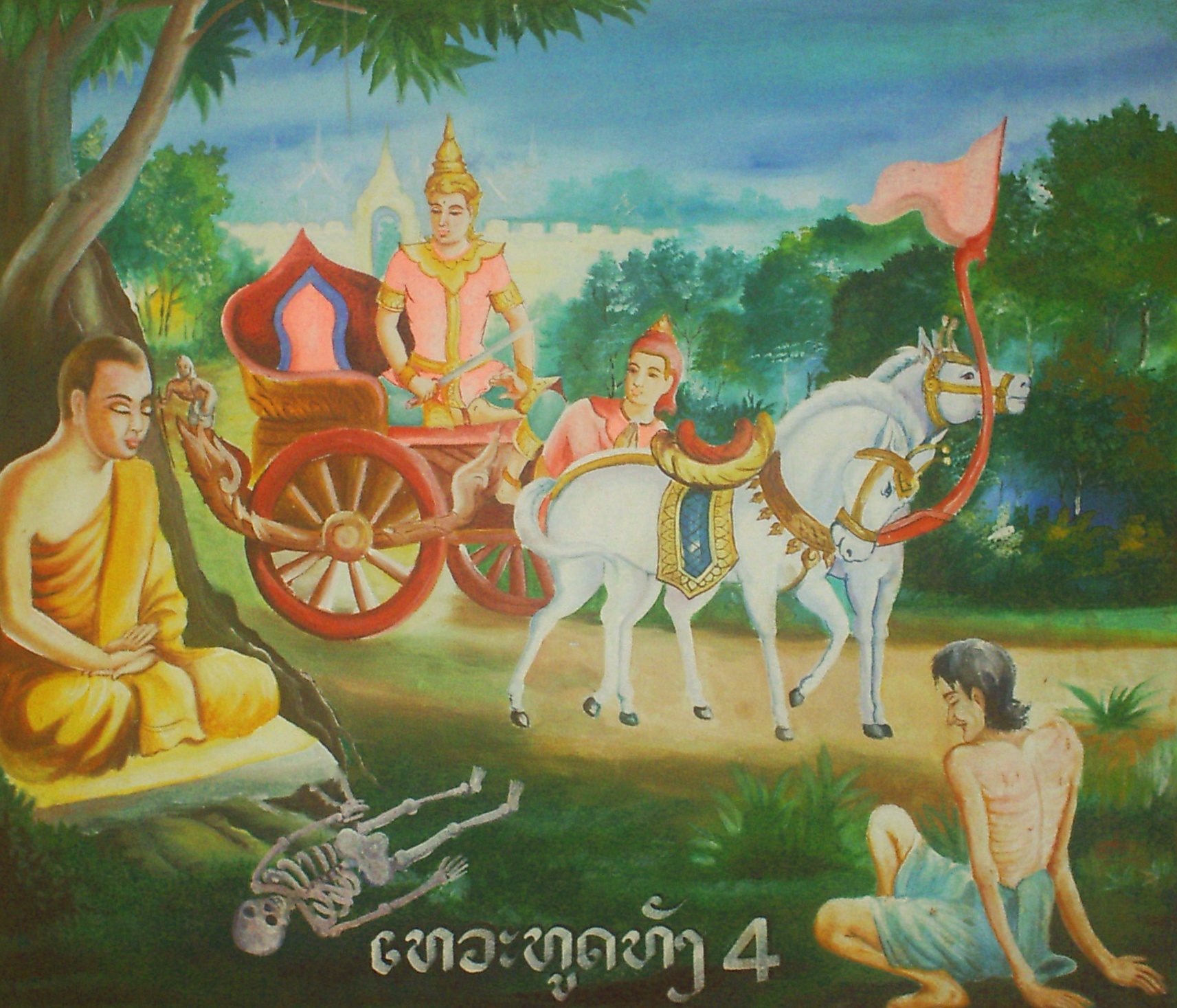
The next morning, his father greeted him outside the palace with a beautiful gilded chariot. He appreciated this favor, but he decided to only ride it as far as his father could see. As soon as he leapt down from his perch, he was confronted by a man. The man was missing a few teeth and was covered in day-old soot. The man promised to him, "Oh Siddhartha! I will watch this chariot for you until you return!" Despite his appearance, the man was surely a kind soul, Siddhartha thought.
Author's note:
For my story, I decided to adapt Siddhartha's first encounter outside of the city. I thought it might be interesting to incorporate some level of premonition on Siddhartha's journey through his dreams. I tried to make it apparent that the father's efforts to coddle and protect Siddhartha would be pointless -- which is also sort of the moral of my story.
Link to Life of Buddha
His father responded, "My beautiful and strong elephant, you have been held under captivity for far too long. I will permit this request. Let me coordinate.with some of my associates so I will know that you will be under supervision of safely watching eyes."
Siddhartha's father sent his most trustworthy guards and associates around to clean up the streets around the palace. The father knew what Siddhartha needed this trip to clear his mind and conscience, bit this did not mean that Siddhartha needed to see evvery unsightly detail. The king even went so far as to pay the taverns nearby to close their doors for the day. The king thought this would keep the regular patrons from contaminating the beautiful mind of his Siddhartha.
After his final finishing touches on cleaning and decorating the city, the king returned home to Siddhartha to give him permission to travel out on the next morning. Siddhartha, who originally would have been ecstatic to finally escape the confines of the palace, s
eemed aloof upon hearing his father's words. Siddhartha thought to himself, "I made this request of my father so that I may see the good and bad of the world for what it is.But now, I fear that I may not be able to handle the sadness and treachery that exists in the real world." He decided to sleep on it, which only lead to the same sequence of dreams he had the night before.
 |
| Wikipedia |
Author's note:
For my story, I decided to adapt Siddhartha's first encounter outside of the city. I thought it might be interesting to incorporate some level of premonition on Siddhartha's journey through his dreams. I tried to make it apparent that the father's efforts to coddle and protect Siddhartha would be pointless -- which is also sort of the moral of my story.
Link to Life of Buddha
Monday, October 27, 2014
Storytelling Wk. 2: Tale From the Riverside
 |
| Source: Wikipedia |
His father softly responded, "The Ganges has its own story that explains its mysterious ways. Our family name, Samprashana, means 'friends of wings' and this is because our ancestors were close companions to the river cranes on the Ganges. It is said that a crane would land on the window sill each morning and greet our ancestors, exchanging a story for a small token of nourishment." The father dimmed the lights in the room and continued, 'Be still, my son, for here is one of the many stories our ancestors have passed down to us."
While the crane was not there to see it from the beginning, he was a very close friend to the mother of the Earth. Because the crane was clever and observant, Mother trusted him with keeping tabs on the living creatures of the valley and their needs. It was mostly a menial quest. Sometimes he would report about a quarrel between mongooses, or he would tell the mother of an intense battle between two great hawks. Eventually a whole new creature appeared in the valley. This beast made the land work for him. It called itself man.
Men were intelligent, emotional, violent, and amazing, the crane thought. Unfortunately, this ability led them to even threaten some of the gods. Men could move quickly on the backs of other animals, and were often haughty enough to challenge the gods to races. One day, a man started a race against one of the gods, and while the god was very powerful, he had not practiced enough riding the horse. The man could make the quickest of turns, highest of jumps, and stop without hurting his horse. This man made the god utterly furious. The god then hid the man's horse in the sunless underworld.
The man could no longer race the gods and thus felt powerless. He made it his lifelong quest to find his racehorse, but after millions of excavations it seemed he would be forever the simple human that he was. At the ancient age of five thousand he finally discovered the horse in the light-less world and he died there of happiness. The god was pleased that his challenger had been defeated, and he began to boast to all of the other men in the world.
The crane could tell that the men were unhappy with how their brother was treated and led to die. They began to rebel against the earth, putting their waste and trash directly into the earth. The crane pleaded to Mother, "We must ease their sorrow or else your beauty will be ruined!" Mother, stricken with grief, cried down from the high heavens and washed the valley and the sunless place with her tears. Her sadness was so terrible that the entire valley began to flood away. The crane knew what he had to do. He dove straight down with the strongest of strikes. The sheer force of his dive made folds in the land that rose up and made what today is the Himalayas. Mother's flood was thus corralled by the mighty mountains, and the river began to look much like it does today.
He had managed to nourish the people's shores, wash away the remains of the man and his horse, and also serve his divine purpose.
"Good night, my little crane," whispered the father as the light washed away.
-_In_Display_near_Hodal_I_Picture_2036.jpg) |
| Sarus Crane - Wikipedia |
-_In_Display_near_Hodal_I_Picture_2036.jpg)
Author's note:
The story I tried to re-tell was the Ganges Story from the Ramayana (Narayan, R. K. (1972) The Ramayana.).
In the original story, Sakara is a fortunate ruler who has planned out a great horse sacrifice. This sacrifice involves the passing of a decorated horse through each area of a country, and this passage is a declaration of the ruler's power. Any opposition to the horse is an act of war. This is where Indra comes in, or the man in my story. Indra goes on to hide the horse behind a meditating saint. Sakara's sons are assigned to dig until they find Sakara's horse. They finally discover Indra's hiding place and the saint is wrongly accused of stealing the horse. This saint is then tortured. This leads to Bhagiratha, similar to the crane in the story, agreeing with Shiva to help avoid the full wrath of Ganga descending upon the earth. The tortured saint thus receives salvation, and the valley is not wiped out by the powerful Ganga.
I tried to refrain from using many of the names in the story because I think the story should appeal on a general level, like a fable. I also changed the horse sacrifice in the Ganges story to a race, mainly because I think a boy would find a race with gods to be very exciting. The crane also took some of the roles that multiple characters did in the story because I wanted him to be the most heroic crane a boy could imagine.
Thursday, October 23, 2014
After it all - Storytelling Week 9
The war was over now. The Pandavas are back. The soldiers could be seen hugging their wives and children next to the fire place. Life was perfect, unless you happened to see the wives and children who no longer had someone to hug. They spent this evening clinging to each other, just hoping that war would never have to happen again.
The Pandavas, as happy as they were, knew it would be no easy task to face the King and his wife the upcoming day. The royal family lost every single one of their century of sons. The King's wife Gandhari had little flecks of each of her children in her eyes, and with each of her inconsiderable tears came also a little of each son back to life for a mere instant. This was clearly a time of sorrow despite the victory.
The King's words escaped, "Where is Bhima? I request the presence of his neck in my grasp." The King began to whirlwind with his fists in hopes he could land one square blow onto the man responsible for the death of so many he loved. Bhima watched from a distance, feeling cowardly because he kept himself away from the violently-swinging King. The king began to call out, "I know you are in here, Bhima." The tension in the room began to peak. His assistant, acknowledging the seriousness of the situation, fetched a fine iron cast of Bhima, knowing that the statue would certainly evoke feelings that could hopefully relieve the king.
The King embraced the cast, giving it all the crushing force that he could muster with his once fine-tuned body. The cast began to wane under the grip of the King, and eventually gave in to the might of his force. By the time the sight-less King laid the cast to rest, it was hardly recognizable as Bhima any longer.
Bhima watched all of this in his own tomb of somber regret, laying himself face down on the lounge in the next room over. He knew what transpired had to happen, but regardless, he was reconciled in knowing that his iron likeness could be used to heal the old king.
Author's Note:
I was running pretty dry for this week, so the point of this story was to include more details on this exchange between the King, Kishna, Bhima, and his statue. I'm not sure why Bhima felt that he had to stay in the King's presence, but I think it was somewhat due to guilt.
Narayan, R. K. (1978). The Mahabharata.
The Pandavas, as happy as they were, knew it would be no easy task to face the King and his wife the upcoming day. The royal family lost every single one of their century of sons. The King's wife Gandhari had little flecks of each of her children in her eyes, and with each of her inconsiderable tears came also a little of each son back to life for a mere instant. This was clearly a time of sorrow despite the victory.
The King's words escaped, "Where is Bhima? I request the presence of his neck in my grasp." The King began to whirlwind with his fists in hopes he could land one square blow onto the man responsible for the death of so many he loved. Bhima watched from a distance, feeling cowardly because he kept himself away from the violently-swinging King. The king began to call out, "I know you are in here, Bhima." The tension in the room began to peak. His assistant, acknowledging the seriousness of the situation, fetched a fine iron cast of Bhima, knowing that the statue would certainly evoke feelings that could hopefully relieve the king.
The King embraced the cast, giving it all the crushing force that he could muster with his once fine-tuned body. The cast began to wane under the grip of the King, and eventually gave in to the might of his force. By the time the sight-less King laid the cast to rest, it was hardly recognizable as Bhima any longer.
Bhima watched all of this in his own tomb of somber regret, laying himself face down on the lounge in the next room over. He knew what transpired had to happen, but regardless, he was reconciled in knowing that his iron likeness could be used to heal the old king.
 |
| This is approximately what Bhima's expression would have been. Source: Link |
Author's Note:
I was running pretty dry for this week, so the point of this story was to include more details on this exchange between the King, Kishna, Bhima, and his statue. I'm not sure why Bhima felt that he had to stay in the King's presence, but I think it was somewhat due to guilt.
Narayan, R. K. (1978). The Mahabharata.
Sunday, October 5, 2014
Storytelling Wk. 6: Next is Reclamation

The scrawny youngster dragged his feet as he approached the group, being extra careful to not look at any one member the wrong way. His wispy dark hair flew past him in the arid wind and he only managed to keep his yellow headgear attached by tying a bright red shoelace around it. The dirt of the entire playground lay nestled in his shirt and pants. Still with his eyes affixed to the cracks in the pavement, he asked, "Can I play over here with you guys?'
The playground was meant to be fun. It should have been fun. For Vibs, it wasn't. Before that day, Vibs spent most of his time trying not to get stepped on while excavating in the sandbox. His only real interaction with people would last as long as it took him to apologize, usually a woefully stutter-ridden "S-s-sorry!" Vibs had no interest in standing in the way of anybody.
Probably the most interesting thing about Vibs was his proximity to something far less kind and unassuming. Vibs was the brother of Ray, the biggest, baddest, and whiniest punk to ever patrol a jungle gym. Ray was not one to be crossed, and most of the kids who had crossed him didn't come out for recess any more. Ray was also manipulative. Despite his overwhelming size, he managed to convince teachers that it was he who was being bullied or having lunch money stolen. Even though Ray was obviously a bad fruit, most knew better than to ever get near him. Thus, his effect on the playground was minimized to mostly fear and not treachery.
That changed one day when I brought my new Spalding basketball to recess. It had a cool leather print and was one of those internalized air pump balls that couldn't go flat even if you tried. I took a long shot, probably about ten feet farther from the hoop than I should have been, and missed the goal completely. I was obviously embarrassed, but that emotion I felt does not compare to what I felt when the ball bounced off the head of the recess ruffian.
Much unlike his usual primal nature, he did not beat me into submission nor yell until his throat dried up. Instead, Ray simply grabbed the ball and sat on it. That's not to say he didn't acknowledge its beauty -- he wouldn't stop touching the new leather with his grimy gauntlets. I was already devastated whenever Ray snatched it, but knowing Ray had my ball made it somehow easier. It was like knowing that it had been blown into oblivion -- completely unreachable, unlike losing a ball across a fence. I had already begun to cope with life after my ball. That's why I couldn't comprehend what Vibs was doing when he tried to kick the ball out from underneath his brother. Ray lashed out, "What are you doing, Squirt?!" to which Vibs replied, much louder than he had ever spoken to someone on this playground, "It's not your ball to take. Give it back, or I'm telling Mom."
Ray proceeded to turn away from all of us, being sure to never come up off this new perch. I groaned as the leather began to stretch and grind between the friction of the massive Ray and the grisly pavement underneath. Vibs again tried to reason with his oaf of a brother, "Ray, maybe they'll let you play with them if you give the ball back. Not everyone is as mean as you are." To this response, Ray huffed out a, "No, I'm alright where I am," and then again turned his back on Vibs.
Vibs would not get another chance to plead with Ray. His slight frame was sent in full somersault down the hill by Ray as he ran off with the ball, clearly playing football with my basketball. The moment was too ugly for any of us to watch. I was so sure that Vibs was buried in all of the dust kicked up in the scuffle, but he managed to get up quickly enough to keep his hat from ending up in the street.
...
So now I stand back in front of Vibs, the bravest runt on the playground, and say, "Of course you can play, but your brother still has my ball." Vibs replies, showing once again that his beast of a brother could not faze him, "I think I know what we can do to get it back."
Author's note:
I realized as I wrote this that a huge chunk of my story actually covers much earlier in the book, where Ravana steals Sita (or Ray steals the basketball from Rama) and I hope that part was okay to include in order to tell my story of Vibihshana's conflict with Ravana and his eventual leaving of Ravana's side to join Rama. I also was not trying to objectify Sita as a basketball, but instead trying to find a relatable object of children on a playground. I still can't figure out how to describe the scene, either from Rama's perspective or Vibs. Rama gets the perspective of Vibs being sent through the dust, and can talk about the size and personality difference between the brothers. I had a difficult time locating a picture of boys fighting over a basketball, so I ended up using it to set the scene on the playground, before Vibs is sent to the dust. I thought modifying the names into something more like what kids could comfortably use made the story flow better than just having their full names. It was hard to describe how Vibs would show him treasures of the Lankan land, so I decided getting the ball back from Ravana would be relevant symbolism.
Source
Buck, William (1976). Ramayana: King Rama's Way.
Sunday, September 21, 2014
Brothers - Storytelling Wk. 3
"Your brother never meant to spite you. He's just never had anyone challenge him until you came along. I know I should have raised him better, but boys will be boys".
I always thought Vali was the absolute coolest guy. He was excellent at stickball, track, and any other test of athleticism and strength. Mom always said that Vali had muscles that were weaved by God. It was odd that someone so blessed could be such a short-tempered and short-sighted brother. Despite his physical advantages, he always tried to prove himself to me -- usually by demonstrating how much farther he could toss a boulder or how easily he could break a tree limb. It bothered him to no end that I couldn't care less about his supernatural strength. This usually caused him to be further incensed, storming off only to later come back and ridicule me for my piano playing or my science projects. I never wanted to argue, but he made it happen. It only got worse.
He often decided it was his obligation to protect the town's animals from ravenous wolves or to jump into burning buildings to check for life inside instead of waiting for our fire department. His favorite "responsibility" was probably whenever storms would scatter the livestock into Cave Creek nearby. Vali would never acknowledge that his servitude was about doing the nice thing for people. He really just enjoyed people knowing that they were indebted to him. On a particularly violent and stormy night, Vali had been digging out some pigs but was taking forever to come home. Against my mother's best wishes, I set out for the creek side to make sure he was okay. It must have been a solid eight hours of searching before I gave up. We reported to the police that he had gone missing, but they said that there had been tons of people stranded in the storm, most of whom were presumed dead. I knew that my brother could not so easily be taken away by a fickle storm, so I was not nearly as devastated as my mother.
On my way home from school each day, I looked out upon our fields, fully expecting to see him running like a madman through the tallgrass. It had been nearly three weeks since the storm, and I had to have been the only one who still thought he was coming back. We heard a sudden thump on the back door. It was Vali! I could not keep myself from grinning while he embraced my mother. I should have noticed the bottle of gin in his knapsack and I should have noticed that he had fresh clothes. But who was I to be upset when the pride of our town was back?
Vali was different now. At first, I thought he was joking around with me when he talked of the night he went missing. He'd say, "I expected you to come fish me out of the creek, you scrawny punk." or "Someone as smart as you should have known I would be staying with Betsy down the road." Vali was arrogant and short-tempered, but I never thought he had it in him to stay the weekend with Betsy -- the girl he once promised to me I would marry someday. When I found out that he and Betsy were much more than just "roommates" during his time away from home, I was crushed.
I felt like I was slowly being towed away from everything that I loved. Vali spent all of his time with my former love. And when he did manage to stumble home, he was completely wasted. My mother was still in shock from losing him, so her only instinct was to coddle him further. She was always pleading with me to make sure Vali had everything he needed. "He needs you to help him on his school work!" This really just meant he was too busy upchucking all night to do his math problems.
When it became apparent that this was going to be my life for my eternity, I packed up my world and applied for individual independence from my mother and Vali. I knew living in my own condominium outside of Brooksdale Community College a few months before school starts would not be nearly as stressful as living with my family. I had grown weary from all of the verbal and physical abuse from the relationship with my brother, and I had grown weary of my mother's unwillingness to do anything about him.
To this very day, I am barred from evening dinners with my mother and brother -- far from welcome in what was once my own home. My mother and brother couldn't understand how much their burden on me was keeping me from succeeding. I am not married to the girl to which I was meant to be married, but I know that without my choice to leave, I'd still be doing homework for my brother.
Author's note:
This was an adaptation of part of Sugreeva's story about his history with his brother, Vali. In the Ramayana the great warrior Vali goes into a cave (deemed Cave Creek in my interpretation) to fight a beast and takes a very long time to come out. The challenge of the beast is instead more of a challenge of stamina in my story; he must save the livestock that has been stranded in the creek. The only person to still believe he is alive is his brother. However, because Vali felt abandoned after being left stranded for so long, he basically shuns his brother from their city and ends up taking his wife, too. I did not incorporate any of Rama's intervention in this matter, as my re-telling only covers everything up to Sugreeva's banishment out of the city.
I remember reading about Vali's great strength and how it would make sense if one of the brothers was the brute jock, while the other was the perceptive and intelligent son. I wish I had made more time to flesh out the reemergence of Sugreeva into Vali's life, so that I could change Vali's imminent death at the hands of Rama into something more optimistic.
The picture I chose was made to set up some imagery of the livestock stranded in Cave Creek.
Source:
I always thought Vali was the absolute coolest guy. He was excellent at stickball, track, and any other test of athleticism and strength. Mom always said that Vali had muscles that were weaved by God. It was odd that someone so blessed could be such a short-tempered and short-sighted brother. Despite his physical advantages, he always tried to prove himself to me -- usually by demonstrating how much farther he could toss a boulder or how easily he could break a tree limb. It bothered him to no end that I couldn't care less about his supernatural strength. This usually caused him to be further incensed, storming off only to later come back and ridicule me for my piano playing or my science projects. I never wanted to argue, but he made it happen. It only got worse.
 |
| Source: Wikimedia commons |

On my way home from school each day, I looked out upon our fields, fully expecting to see him running like a madman through the tallgrass. It had been nearly three weeks since the storm, and I had to have been the only one who still thought he was coming back. We heard a sudden thump on the back door. It was Vali! I could not keep myself from grinning while he embraced my mother. I should have noticed the bottle of gin in his knapsack and I should have noticed that he had fresh clothes. But who was I to be upset when the pride of our town was back?
Vali was different now. At first, I thought he was joking around with me when he talked of the night he went missing. He'd say, "I expected you to come fish me out of the creek, you scrawny punk." or "Someone as smart as you should have known I would be staying with Betsy down the road." Vali was arrogant and short-tempered, but I never thought he had it in him to stay the weekend with Betsy -- the girl he once promised to me I would marry someday. When I found out that he and Betsy were much more than just "roommates" during his time away from home, I was crushed.
I felt like I was slowly being towed away from everything that I loved. Vali spent all of his time with my former love. And when he did manage to stumble home, he was completely wasted. My mother was still in shock from losing him, so her only instinct was to coddle him further. She was always pleading with me to make sure Vali had everything he needed. "He needs you to help him on his school work!" This really just meant he was too busy upchucking all night to do his math problems.
When it became apparent that this was going to be my life for my eternity, I packed up my world and applied for individual independence from my mother and Vali. I knew living in my own condominium outside of Brooksdale Community College a few months before school starts would not be nearly as stressful as living with my family. I had grown weary from all of the verbal and physical abuse from the relationship with my brother, and I had grown weary of my mother's unwillingness to do anything about him.
To this very day, I am barred from evening dinners with my mother and brother -- far from welcome in what was once my own home. My mother and brother couldn't understand how much their burden on me was keeping me from succeeding. I am not married to the girl to which I was meant to be married, but I know that without my choice to leave, I'd still be doing homework for my brother.
Author's note:
This was an adaptation of part of Sugreeva's story about his history with his brother, Vali. In the Ramayana the great warrior Vali goes into a cave (deemed Cave Creek in my interpretation) to fight a beast and takes a very long time to come out. The challenge of the beast is instead more of a challenge of stamina in my story; he must save the livestock that has been stranded in the creek. The only person to still believe he is alive is his brother. However, because Vali felt abandoned after being left stranded for so long, he basically shuns his brother from their city and ends up taking his wife, too. I did not incorporate any of Rama's intervention in this matter, as my re-telling only covers everything up to Sugreeva's banishment out of the city.
I remember reading about Vali's great strength and how it would make sense if one of the brothers was the brute jock, while the other was the perceptive and intelligent son. I wish I had made more time to flesh out the reemergence of Sugreeva into Vali's life, so that I could change Vali's imminent death at the hands of Rama into something more optimistic.
The picture I chose was made to set up some imagery of the livestock stranded in Cave Creek.
Source:
- Narayan, R. K. (1972) The Ramayana
Thursday, September 18, 2014
Week 5: The time of a new king
The kingdom did not hesitate for anyone or anything. The birds chirped as early as they could. The sun gazed down as soon as its warm face as erupted over the horizon. Dasaratha had obviously had a pretty horrendous past few days, so it wasn't completely inconceivable for him to be sleeping in. It was only when some of his servants came in to dress him that they realized what had happened. In shock of Rama's exile, the great king Dasaratha had perished.
The couriers of the kingdom were immediately sent out to ride to Kekaya to find their new king. Preparations were made for Dasaratha's funeral ceremony, but all of it felt too soon for anyone to actually accomplish much of anything. The seamstress could not find her dexterity while sewing his silken gown and the carpenter could not manage to avoid cracking the wood on his casket that was being carved away. It seemed as if the people of Ayodhya had lost a father-- their king Dasaratha.
When the couriers arrived in Kekaya, iDasarat was revealed to them that they were in search of the king's son Bharata. All of the messengers were confused. One said, "By Brahma, this is not Bharata's throne to take!". Another retorted, "I'd soon assume we give the kingdom up to the Rakshasas if Dasaratha or Rama is not the one caring for us". Nevertheless, the couriers retrived Bharata from his residence. He appeared very disturbed; his beard had become long and grisly, and his eyes yelped out for sleep. Bharata had not slept for at least two days, and even if he managed to sleep, the only dream he managed to have was the same horrible terror. It was a simple nightmare. He would be walking through the forest, obviously on a hunt. But no matter which direction he traveled, he always managed to get back to the same clearance. Then he would hear screaming (which he managed could be of his mother) in the distance and chains shattering. He tried to run to help whomever was being tortured, but still could not manage to escape the clutches of the forest. The screaming got so loud that the trees began to bleed from their ears. He could only wake up if he managed to run himself hard enough into one of the bases of the trees.
Bharata pleaded, "Have you come to help me with my quest for proper slumber?" The couriers shook their heads, and felt awful about the inevitable news they would have to explain to this clearly drained son of a lost king. Bharata sat them down and requested that his roommate (and uncle) play some soft music so as to calm his nerves. He felt that he knew what was happening. "It's my mother, isn't it? I've only had the most horrible dreams about her screams in the wilderness near Ayodhya". The messenger stopped him before Bharata could go on, "No, your mother is in good health". Bharata had no more patience to guess who in the family had fallen and began to weep. "It was Rama, wasn't it?" The couriers again shook their heads.
One of the messengers who had yet to speak gently grabbed Bharata's hand and solemnly explained, "Bharata, son of the great Dasaratha, you must know that your father has died from shock and grief due to your brother's exile into the wilderness of Ayodhya. We understand how hard of a a time this must be for you, but we also request your presence in Ayodhya as the new king. We have made arrangements for you to take your throne in the morning". And as the last bit of his speech trailed off all of the messengers and the son of a great king began to sob synchronously They planned to return that night, but soon realized that this was a time to mourn with their newly established king.
Author's note:
I tried to make this story more about how sad and distraught everyone was after the king's death. I didn't like how the messengers would not tell Bharata that it was his father who had died until Bharata made it back to Ayodhya to see for himself. I also wanted to make more of a connection between the messengers and Bharata as they mourned over the loss of a father and king.
Buck, William (1976). Ramayana: King Rama's Way.

The couriers of the kingdom were immediately sent out to ride to Kekaya to find their new king. Preparations were made for Dasaratha's funeral ceremony, but all of it felt too soon for anyone to actually accomplish much of anything. The seamstress could not find her dexterity while sewing his silken gown and the carpenter could not manage to avoid cracking the wood on his casket that was being carved away. It seemed as if the people of Ayodhya had lost a father-- their king Dasaratha.
When the couriers arrived in Kekaya, iDasarat was revealed to them that they were in search of the king's son Bharata. All of the messengers were confused. One said, "By Brahma, this is not Bharata's throne to take!". Another retorted, "I'd soon assume we give the kingdom up to the Rakshasas if Dasaratha or Rama is not the one caring for us". Nevertheless, the couriers retrived Bharata from his residence. He appeared very disturbed; his beard had become long and grisly, and his eyes yelped out for sleep. Bharata had not slept for at least two days, and even if he managed to sleep, the only dream he managed to have was the same horrible terror. It was a simple nightmare. He would be walking through the forest, obviously on a hunt. But no matter which direction he traveled, he always managed to get back to the same clearance. Then he would hear screaming (which he managed could be of his mother) in the distance and chains shattering. He tried to run to help whomever was being tortured, but still could not manage to escape the clutches of the forest. The screaming got so loud that the trees began to bleed from their ears. He could only wake up if he managed to run himself hard enough into one of the bases of the trees.
Bharata pleaded, "Have you come to help me with my quest for proper slumber?" The couriers shook their heads, and felt awful about the inevitable news they would have to explain to this clearly drained son of a lost king. Bharata sat them down and requested that his roommate (and uncle) play some soft music so as to calm his nerves. He felt that he knew what was happening. "It's my mother, isn't it? I've only had the most horrible dreams about her screams in the wilderness near Ayodhya". The messenger stopped him before Bharata could go on, "No, your mother is in good health". Bharata had no more patience to guess who in the family had fallen and began to weep. "It was Rama, wasn't it?" The couriers again shook their heads.
One of the messengers who had yet to speak gently grabbed Bharata's hand and solemnly explained, "Bharata, son of the great Dasaratha, you must know that your father has died from shock and grief due to your brother's exile into the wilderness of Ayodhya. We understand how hard of a a time this must be for you, but we also request your presence in Ayodhya as the new king. We have made arrangements for you to take your throne in the morning". And as the last bit of his speech trailed off all of the messengers and the son of a great king began to sob synchronously They planned to return that night, but soon realized that this was a time to mourn with their newly established king.
Author's note:
I tried to make this story more about how sad and distraught everyone was after the king's death. I didn't like how the messengers would not tell Bharata that it was his father who had died until Bharata made it back to Ayodhya to see for himself. I also wanted to make more of a connection between the messengers and Bharata as they mourned over the loss of a father and king.
Buck, William (1976). Ramayana: King Rama's Way.


Thursday, September 11, 2014
Week 4 Storytelling: The genie
Kaikeyl was lounging about, eating her oranges and mangoes in the den. Life could not be more pleasant. Here she was, scantily clad in only her beads and pearls, reveling in the fact she had raised her son, Bharata to be the perfect young man. The only problem was that Rama was the heir to what she thought was to be her son's throne. She loved Rama, but she felt that Bharata reflected everything that was right in the world of Ayodha. Bharata had the true human package, being able to properly empathize and work alongside people. She thought Rama really just kept to himself and his wife-- truly a nice young man, but nothing compared to Bharata.
She realized she still had to sort through some old belongings she had forgotten about. These items were once very valuable, but as she was a queen, they didn't matter. The first thing she noticed when rummaging was an old gas lamp with multitudes of languages inscribed upon it. She had been advised against opening it by her own mother for the past 20 years. "I am a queen of Ayodha. Who is to say what I can't open?" She proceeded to pry its top from the base and a gigantic plume of dust filled the room. It was black as soot and smelled of putrid food.
Manthara, a wicked genie, was all that remained of the lamp and dust once it all settled. She was not the most stunning of characters, having a plump belly and unfortunate frame. Her voice also sounded like a gull being strangled. Manthara chortled, "Hello Kaikeyl! How great it is to finally be in your presence. You must forgive me for my appearance, as I am obviously very cramped in that awful vesicle". Kaikeyl had yet to respond, verbally or with gesticulation. Manthara continued, "You may have your two wishes granted now, no questions asked! Just remember that actions and words -- or lack thereof -- have consequences!"
Kaikeyl was known by her people as loyal, trustworthy, and logical, which is why it was so peculiar for her to ask for her wishes abruptly. She wished for Bharata to become king over Rama, and she asked for Kausalya, Rama's mother, to forgive her for her wish.
~ Years later ~
It was late in the afternoon and Kausalya was still unhappy with Kaikeyl. She came up to her at dinner one evening and sarcastically told her, "I forgive you for stealing the throne for your Bharata, because it has taught my son how to NOT be a proper king".
Bharata, having been given the throne despite not being the proper heir according to his father, had become a spoiled tyrant. Rama was patient with him for a great time, even being part of his consul for part of his reing. This, however, became too much for Rama whenever the people of Ayodha began to complain of the awful taxes, welfare, and future prospect of the kingdom. Rama eventually lead a coup in order to take down the tyrant. Bharata fell to his death while trying to escape the palace during its siege.
Kaikeyl, a bit older and wiser now, realized her mistake. She made haste in giving her son the throne without considering the consequences. Manthara's words echoed in her mind.
 Author's Note:
This was a different take on Manthara's visit to Kaikeyl where she asks Kaikeyl to use her two wishes to save her son Bharata. I made the maid servant into a genie to give it a fable/storytale feel. I started to rn out of ideas on how Bharata was to become a spoiled king, so I made it into a summary of his fall instead of a conversation. It's basically a story over: "Be careful what you wish for".
Buck, William (1976). Ramayana: King Rama's Way.
She realized she still had to sort through some old belongings she had forgotten about. These items were once very valuable, but as she was a queen, they didn't matter. The first thing she noticed when rummaging was an old gas lamp with multitudes of languages inscribed upon it. She had been advised against opening it by her own mother for the past 20 years. "I am a queen of Ayodha. Who is to say what I can't open?" She proceeded to pry its top from the base and a gigantic plume of dust filled the room. It was black as soot and smelled of putrid food.
Manthara, a wicked genie, was all that remained of the lamp and dust once it all settled. She was not the most stunning of characters, having a plump belly and unfortunate frame. Her voice also sounded like a gull being strangled. Manthara chortled, "Hello Kaikeyl! How great it is to finally be in your presence. You must forgive me for my appearance, as I am obviously very cramped in that awful vesicle". Kaikeyl had yet to respond, verbally or with gesticulation. Manthara continued, "You may have your two wishes granted now, no questions asked! Just remember that actions and words -- or lack thereof -- have consequences!"
Kaikeyl was known by her people as loyal, trustworthy, and logical, which is why it was so peculiar for her to ask for her wishes abruptly. She wished for Bharata to become king over Rama, and she asked for Kausalya, Rama's mother, to forgive her for her wish.
~ Years later ~
It was late in the afternoon and Kausalya was still unhappy with Kaikeyl. She came up to her at dinner one evening and sarcastically told her, "I forgive you for stealing the throne for your Bharata, because it has taught my son how to NOT be a proper king".
Bharata, having been given the throne despite not being the proper heir according to his father, had become a spoiled tyrant. Rama was patient with him for a great time, even being part of his consul for part of his reing. This, however, became too much for Rama whenever the people of Ayodha began to complain of the awful taxes, welfare, and future prospect of the kingdom. Rama eventually lead a coup in order to take down the tyrant. Bharata fell to his death while trying to escape the palace during its siege.
Kaikeyl, a bit older and wiser now, realized her mistake. She made haste in giving her son the throne without considering the consequences. Manthara's words echoed in her mind.

This was a different take on Manthara's visit to Kaikeyl where she asks Kaikeyl to use her two wishes to save her son Bharata. I made the maid servant into a genie to give it a fable/storytale feel. I started to rn out of ideas on how Bharata was to become a spoiled king, so I made it into a summary of his fall instead of a conversation. It's basically a story over: "Be careful what you wish for".
Buck, William (1976). Ramayana: King Rama's Way.
Wednesday, August 20, 2014
Week 1 Storytelling: You can count on time
WHAM. Something large, something gilded, something slick smacks me squarely on the noggin.
A clock whirrs and chimes in the distance - one ring, two rings.
I struggle to get up from my cot, and then I'm immediately clinging the ground. These boots are awful-- mustn't leave them unbuckled again.
The clock again chimes. Or does it yelp? Three rings, four rings.
The door to the chamber swings open. It must be the dead of night. Sauntering over to the door, I give it one good shove closed.
The clock beings to wretch, ringing for the fifth and sixth time.
How clumsy of me! These sticks must have been sent flying when I struggled with my boots. They still need to be gathered up.
The clock barks: "Seven! Eight!".
This is getting ridiculous. The gathered sticks have spilled back down to the floor. Only makes sense to put them in order, all in a line.
A shrill scream emanates from the clock, nine and ten
A slight knocking is coming from the door. I peer through the peep hole, but nothing of merit is outside. Upon opening the door, I discover a nice plump hen making its way down the yard.
The clock ushers me outside-- eleven, twelve.
The hen is nowhere to be found, but I can only think it has made its way down the ravine at the end of the property. This hen isn't going to catch itself. I being my descent.
The clock whispers from above the gully: "thirteen, fourteen".
The hen remains uncaptured, but something much more beautiful has piqued my interest. Wonderful young ladies, dancing in their work clothes, are making their way around at the bottom.
The clock again begins to blare through the abyss, 'fifteen, sixteen'
Finally, I have made it to their ballroom. The maids touch their lips to my cheek.
The clock attempts to bludgeon me with a seventeenth and eighteenth fist.
The maids at the front were all hiding the truest prize of all. A most astonishing damsel waits for me, beckoning me closer to her.
The clock finally lands a blow. I feel my skull give way to its gilded fist. "Nineteen, twenty"
I sit up in bed. I thump my alarm clock, which has been going off for a good twenty minutes. Good Lord, am I hungry!

Source: Flickr
Author's Note:
My story was inspired by the nursery rhyme, One, Two, Buckle My Shoe . You can find the traditional counting rhyme in The Nursery Rhyme Book, edited by Andrew Lang (1897).
Subscribe to:
Posts (Atom)